

What Will Meaningful Work Look Like in an AI World?
“If AI can do more and more of our work, what kinds of work will remain uniquely human?”
That is the big question that Riley has spent years exploring through her work in technology, writing, research, and community building.
Kimiya Labs emerged from that exploration as a space where people can better understand AI, rethink the future of meaningful work, and explore how human creativity and collaboration can create value in a rapidly changing world.

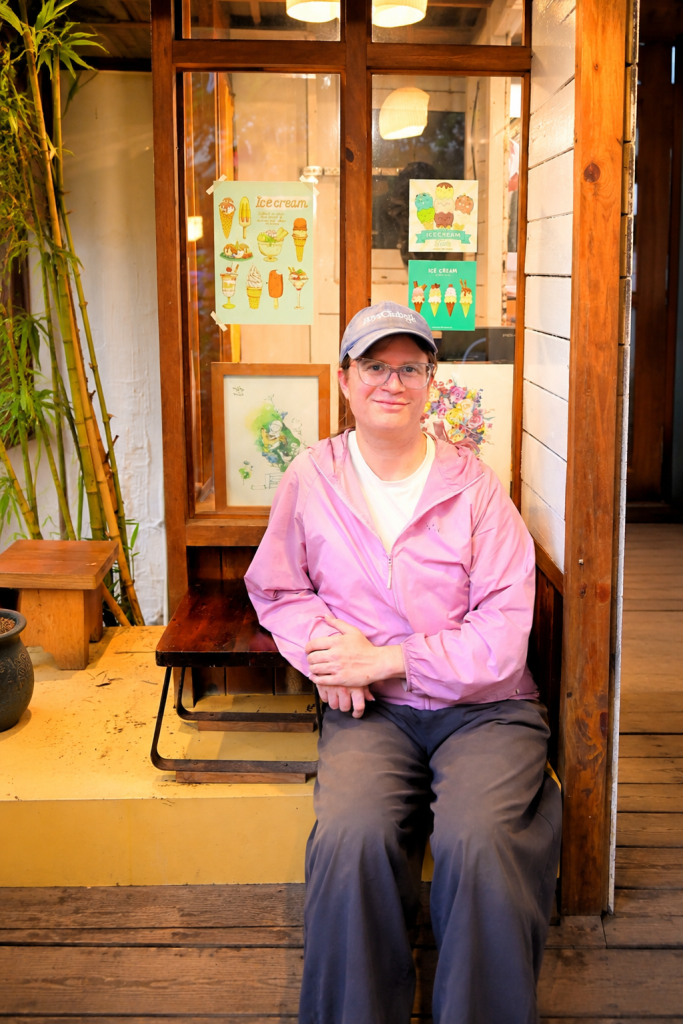
The founder of Kimiya Labs
The ideas behind Kimiya Labs draw from more than a decade of Riley’s work across technology, learning, and community building. Her career has taken her through banking, retail, security engineering, network engineering, technology journalism, and freelance writing.
Her work in community building also led to opportunities that allowed her to spend extended periods focused on research and exploration. One such opportunity enabled her to live and work in Vietnam for years, dedicating her time to studying AI, the future of work, and the questions that would eventually become the foundation of Kimiya Labs.
Over those years, Riley has spent countless hours researching AI and the future of work through academic papers, industry reports, podcasts, and emerging technology publications. This ongoing research has allowed her to follow not only the latest technological developments, but also the broader social and economic changes that may shape how people work in the years ahead.
Beyond research, Riley has also gained firsthand insights through the Đà Lạt Tech Community, where she organized regular discussions on AI, emerging technologies, and their real-world applications. These weekly conversations gave her the opportunity to hear how people were experimenting with new tools, the challenges they encountered, and the questions they were trying to answer as technology continued to evolve.
As a result, Kimiya Labs is designed based on the strong sense of the founder in AI, technologies and community. Riley believe that through this Lab, participants will develop the critical thinking and collaborative capabilities needed to create meaningful work in a rapidly changing world.
The Vision Behind Kimiya Labs
Riley strongly believes that AI will replace many forms of work in the years ahead, particularly jobs that are repetitive, routine, and process-driven, including roles in factories and parts of the service industry.
Because of this, she sees a growing urgency to help people understand what changes may be coming, which types of work are most likely to be affected, and how they can begin preparing for the future. In her view, the sooner people develop the knowledge, skills, and ways of thinking needed to navigate these shifts, the better positioned they will be to take advantage of new opportunities in the years ahead.
Throughout the program, Riley guides participants to work toward finding their own answers to questions such as:
• What problems are worth solving?
- Which parts of a process should be automated?
- Which tasks depend on human judgment, creativity, empathy, or lived experience?
- How might AI create new possibilities rather than simply making existing work faster?
The goal is not to predict the future with certainty. The goal is to develop a way of critical thinking and collaborative skills that helps people navigate uncertainty with greater confidence and clarity.
How Kimiya Labs Works
Kimiya Labs is held entirely online. It runs over eight weeks. Each week includes two sessions (practical, theory).
Riley believes these conversations should be accessible to anyone, regardless of where they live. By bringing together participants from different places, backgrounds, and industries, the online format creates opportunities for people to learn from one another while exploring how technology is reshaping the world around them.
The eight-week format gives participants time to move beyond simply learning about AI and begin applying it in practice. Through a combination of discussion, experimentation, and reflection, ideas can develop gradually while creating space for collaboration, feedback, and meaningful learning.
The practical sessions focus on applying AI tools to real projects, businesses, and challenges brought into the lab. The theory sessions explore broader questions surrounding work, creativity, economics, human contribution, and the long-term implications of technological change. Together, they help participants understand not only what AI can do today, but also how these technologies may shape the future and how they might choose to respond.
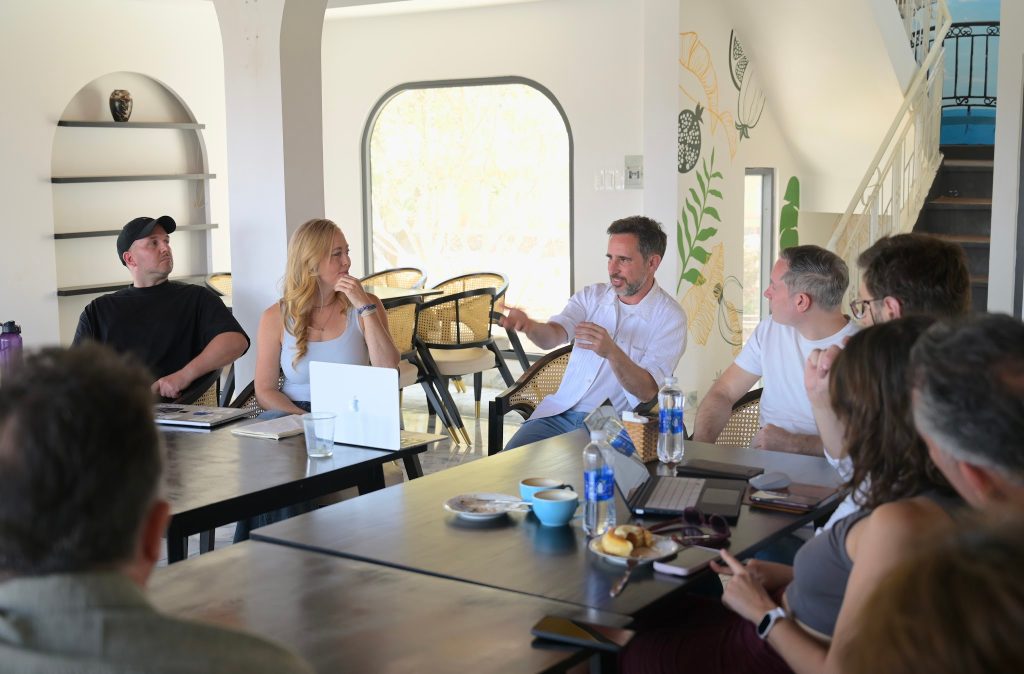
Thinking critically about AI
An important layer of Kimiya Labs is critical thinking.
Riley believes that as artificial intelligence advances, human value will increasingly lie in higher-value work that combines creativity, innovation, and the ability to solve problems at a larger scale.
Expanding on that idea, she explained: “There is no shortage of meaningful problems waiting to be solved. From small everyday challenges to complex social and organizational issues, opportunities for contribution are everywhere. The challenge is not finding problems, but deciding which problems are worth dedicating time and attention to.”
This question has shaped much of Riley’s research and work in this project. Rather than focusing solely on efficiency, Kimiya Labs encourages participants to think more carefully about how technology can accelerate a person’s ability to solve problems.
The lab encourages participants to step back and ask broader questions.
• What problems are worth solving?
• Which parts of a process should be automated?
• Which tasks depend on human judgment, creativity, empathy, or lived experience?
• How might AI create new possibilities rather than simply making existing work faster?
These questions do not always have straightforward answers, but learning how to think about them may become increasingly important as technology continues to evolve.
Beyond Individual Productivity
Another important layer of Kimiya Labs is collaborative capability.
This idea comes from Riley’s recent research on adventure ecology—the relationships between humans and the larger intelligent technical world we live within.
One metaphor Riley often uses comes from stories like Lord of the Rings. No single character could complete the journey alone. Each member of the Fellowship brought different strengths, perspectives, and skills that helped the group overcome challenges that would have been impossible for any one person to solve.
Riley believes the future may work in a similar way. As AI expands the capabilities of individuals, the most important question may not be how powerful your AI is, but who is in your party. A writer, a designer, a developer, an entrepreneur, and their respective AI systems can accomplish far more together than any of them could alone. Innovation emerges not from a single person, but from the collective intelligence created when different people, ideas, and technologies work together toward a shared goal.
In this sense, Kimiya Labs is not only about helping individuals become more effective. It is about exploring what becomes possible when people bring their knowledge, experiences, creativity, and AI-supported skills into the same space. Through that process, new ideas, new collaborations, and new forms of innovation can emerge that would have been difficult for any one person to create alone.

Doubt-tolerance in practice
One of the biggest challenges facing Kimiya Labs is understanding the real questions and challenges people face as AI becomes part of their everyday work.
“The questions and challenges that lie ahead are in properly addressed since the doubts of the target audience, that is, gathering information from everyday users of this intelligent system and understanding their challenges rather than mine alone.” – said Riley.
Although Riley has spent years researching AI, much of that understanding has naturally been shaped by her own experiences, interests, and observations. The challenge is recognizing that people encounter AI in very different ways depending on their work, goals, industries, and circumstances. The questions facing a business owner, designer, educator, developer, or freelancer may be very different from one another.
Rather than treating participants as passive learners, Kimiya Labs invites them to help shape the conversation. Their experiences, questions, and challenges become part of the learning process itself, helping the program remain grounded in real-world needs rather than assumptions. In many ways, this uncertainty is not simply a challenge to overcome, but an opportunity to learn, adapt, and build a more relevant learning experience together.
The core idea
The core ideas behind Kimiya Labs are simple: learning to work with AI, thinking critically, collaborating with others, and developing comfort with uncertainty.
““The future belongs not to those who spend the most time working, but to those who can navigate uncertainty, combine human creativity with collaboration, and use AI to tackle meaningful problems.”
At its core, the lab helps participants learn how to work alongside AI, spend less time on routine tasks, and focus more attention on meaningful work. It encourages critical thinking about the opportunities and challenges created by a rapidly changing world, while creating space for people to collaborate, combine their strengths, and build things that would be difficult to create alone. Underlying all of this is doubt-tolerance: the ability to move forward even when the answers are unclear and the future remains uncertain.
Kimiya Labs is an invitation to explore what that future might look like—for your work, your projects, the people you choose to build with, and the impact you want to create.

If you’re interested in learning more, you can visit the Kimiya Labs website for additional information. Applications are currently open for the next cohort, and anyone is welcome to apply. At the moment, the program is being offered entirely online.
Link: kimiyamag.com/labs/
